
AI ANGELS
Reconciling my ethics with my love of the uncanny

Last week, I came across a reel by IG: unearthlyai. It features AI-generated art and audio assets, animated and arranged into a series of unsettling vignettes—offering only the event horizon of a larger, inaccessible, sci-fi/horror narrative.
The low resolution of the lore might be seen as a result of the limitations of generative AI art - There are lapses in spatial logic and consistency as they pertain to character designs, postures, and speech. As a result, the content can only be short, vague, abstract, eerie, strange, and engage with the viewer on a strictly liminal stage.
Any attempt to move from this nightmare-like ambiance into a more traditional mode of storytelling would undo the artifice of feeling as though what you are experiencing extends deep into some imperceptible dimension. It is that inaccessibility that creates a desire to know that cannot be satisfied - and it is that tension that spins my imagination; I have to admit that I honestly really, really like looking at stuff like this.
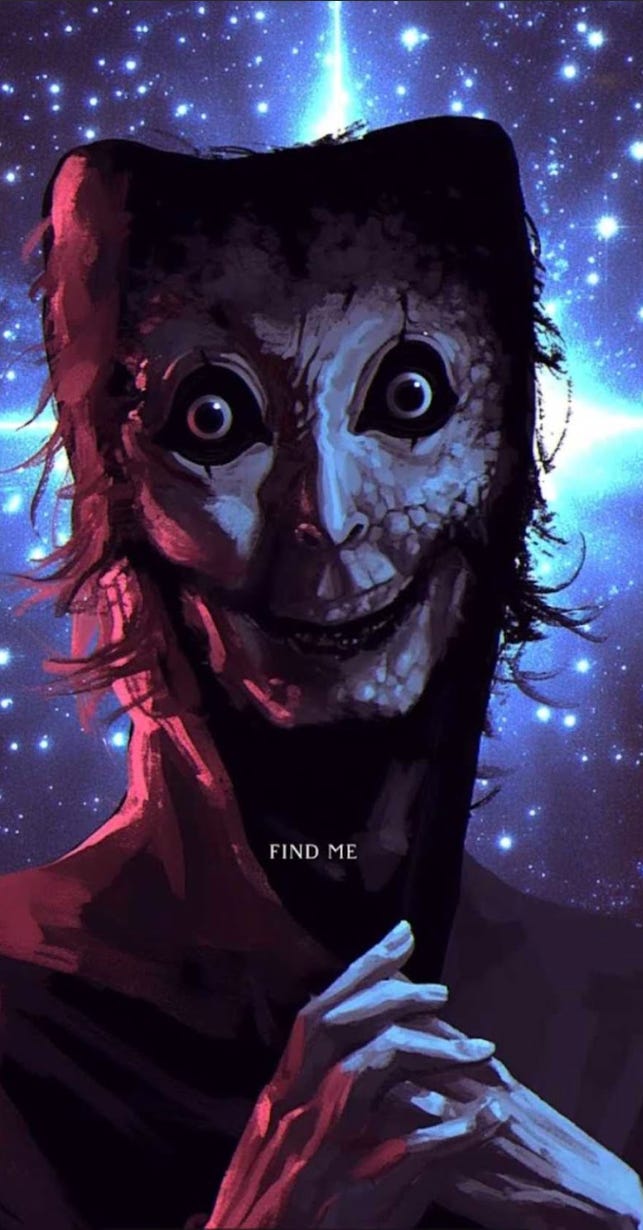
Other accounts like The Archive In-between or Worlds of Urban similarly mine the uncanny valley for the unsettling content that inspires their respective communities to collaborate on lore and engage in roleplay in a manner that I haven’t seen since old fandom message board days. I can’t help but find this neat, but I also find myself wanting to reconcile my enjoyment of these products with my feelings about the artificial intelligence industry.
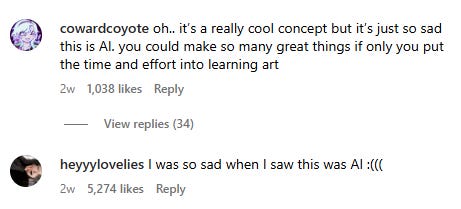
I understand the feelings here, and those feelings are rooted - I believe - in legitimate anxiety over the material consequences that artificial intelligence will have on the economy, politics, intellectual property rights and culture. I wonder if those specific concerns are being unfairly levied against the merit of these works, or if it’s possible to have a discussion on the artistic merit of this content without addressing the broader socio-economic ramifications of artificial intelligence. Let’s assume it’s possible, as the larger conversation around AI is beyond the scope of this one post.
Another question I have, then, is to what degree does the creator bare a debt of responsibility for the lack of recognition paid to the artists on which these generative AI’s were trained? On the flipside, would the blues or hard rock as we know it today exist if it weren’t for a century of bands riffing off each other’s music. The creation of the jazz “standard” might be unfathomable to contemporary artistic mores that have been - in my opinion - overly informed by the litigious corporations and their exploitation of copyright.
What’s indisputable is that the tools exist. You can’t ban code and as we learned last week when DeepSeek spooked the tech market, this technology will only become easier to maintain and proliferate as its overhead cost continues to plummet to the point where even the most sophisticated generative tools are able to run directly on our smartphones. It can’t be stopped.
But does any of that really absolve my ethical consciousness? I want to lean on permissions like “great artists steal” to suggest that what we’re talking about here is simply automated inspiration. However attributing that Picasso quote to generative AI still leaves a bad taste in my mouth, and that must be the result of a guilty conscious, right?
Obviously, it isn’t helpful or productive to tell these creators to simply “learn to draw” or that if they want to realize their vision, they need to pay a team of concept artists, voice actors and musicians to realize their vision for a 15 second tik tok. Whatsmore - in the cases I’ve linked - these are creators who are intentionally leaning into the flawed, uncanny images generated by artificial intelligence. It’s part of the aesthetic.
A major studio example of this motif is the intro to Marvel’s Secret Invasion which features an AI generated opening to reflect the conspiracy of the uncanny shape shifting Skrulls who are central to the plot of the series.
It looks like shit to be honest but I think it’s a cool idea!
In her 1969 essay "Trash, Art, and the Movies" film critic Pauline Kael writes:
"I’m frequently asked why I don’t write my theory of the movies. The answer is simple: because I feel no need of one. I go to a movie, I watch it, and I ask myself what I am feeling, and what the movie has done to me."
A common motif in Kael’s writing that I have long responded to is that beyond all else, engagement with art is a sensuous experience. I don’t know how to look at some AI assisted art without enjoying how it makes me feel. She goes on to write in the same essay:
If somewhere in the Hollywood-entertainment world someone has managed to break through with something that speaks to you, then it isn't all corruption.
While the ethical considerations when dealing with Hollywood are different from those of BIG AI, I think it can be said that both entities are algorithmically generative and concerned entirely by metrics that are divorced from morality or artistic integrity. Disney editing out gay kisses so it can make money in certain markets is offensive to me but it doesn’t at all affect how I feel when watching The Hunchback of Notre Dame.
If the art wouldn’t exist without a corrupt system, is that truly an argument for the art to not exist?
The zeitgeist of humans through modern time, is that of a search for authenticity. AI feigns authentic and in doing so creates a sense of disgust of sorts.